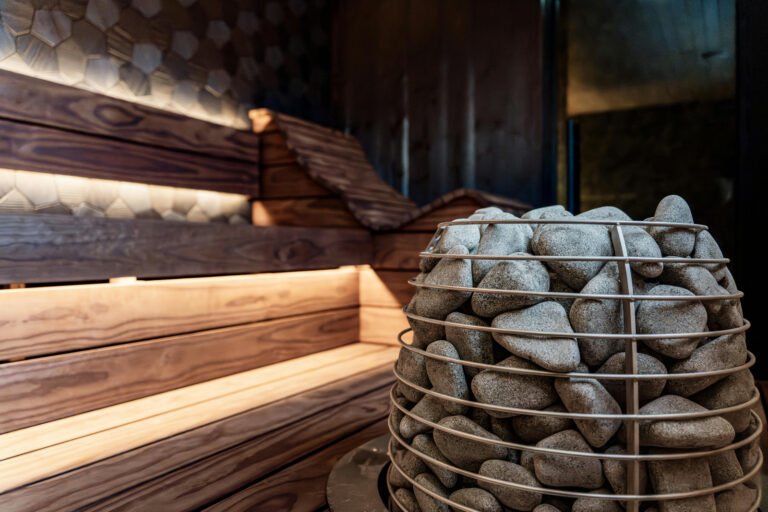

How the Heat Doesn’t Just Relax You — It Changes You
We’ve already traveled through sauna history and culture — now it’s time to look at what happens when you make the sauna part of your life, not just your weekend.
Forget detox myths and “miracle claims.” The truth is more interesting and, frankly, more impressive: decades of research show that sitting in a hot room can strengthen your heart, sharpen your brain, and calm your nervous system — if you do it regularly.
What the Research Actually Shows
The sauna is one of the few wellness practices with a remarkably strong scientific record — particularly from Finland, where researchers have followed tens of thousands of people over decades. The findings are consistent: regular sauna use is linked to better heart health, lower disease risk, and improved overall longevity.
- Cardiovascular health: Regular sauna bathing is associated with a 50–63% lower risk of sudden cardiac death and a 40–50% lower risk of fatal cardiovascular disease among those who used the sauna multiple times per week, compared to once-week users. (Laukkanen et al., JAMA Internal Medicine, 2015)
- All-cause mortality: Frequent users also showed a 40% lower risk of death from any cause over a 20-year follow-up. (Laukkanen et al., 2018)
- Brain health: Men who used the sauna four to seven times weekly had a 65–66% lower risk of dementia and Alzheimer’s disease than those who went once. (Laukkanen et al., Age and Ageing, 2017)
- Blood pressure & vascular function: Repeated heat exposure improves arterial flexibility and endothelial function — helping blood vessels stay responsive and lowering overall strain on the heart. (Gayda et al., 2012; Zaccardi et al., 2021)
- Inflammation & longevity markers: Sauna-induced heat stress increases heat-shock proteins and reduces C-reactive protein (CRP), aiding cellular repair and lowering chronic inflammation. (Heinonen et al., 2018)
- Mood & mental health: Regular sessions correlate with improved mood and fewer depressive symptoms, likely due to the combined effects of heat-induced endorphin release and deep relaxation. (Complementary Therapies in Medicine, 2018)
- Exercise-like response: A typical sauna session raises heart rate to 120–150 bpm — roughly equivalent to brisk walking — temporarily doubling cardiac output and stimulating circulation. (Annals of Medicine, 2019)
While most of these findings come from observational studies, the data converge on one theme: consistent, repeated sauna use produces measurable physiological benefits that scale with regularity — not from one-off visits, but from steady, habitual practice.
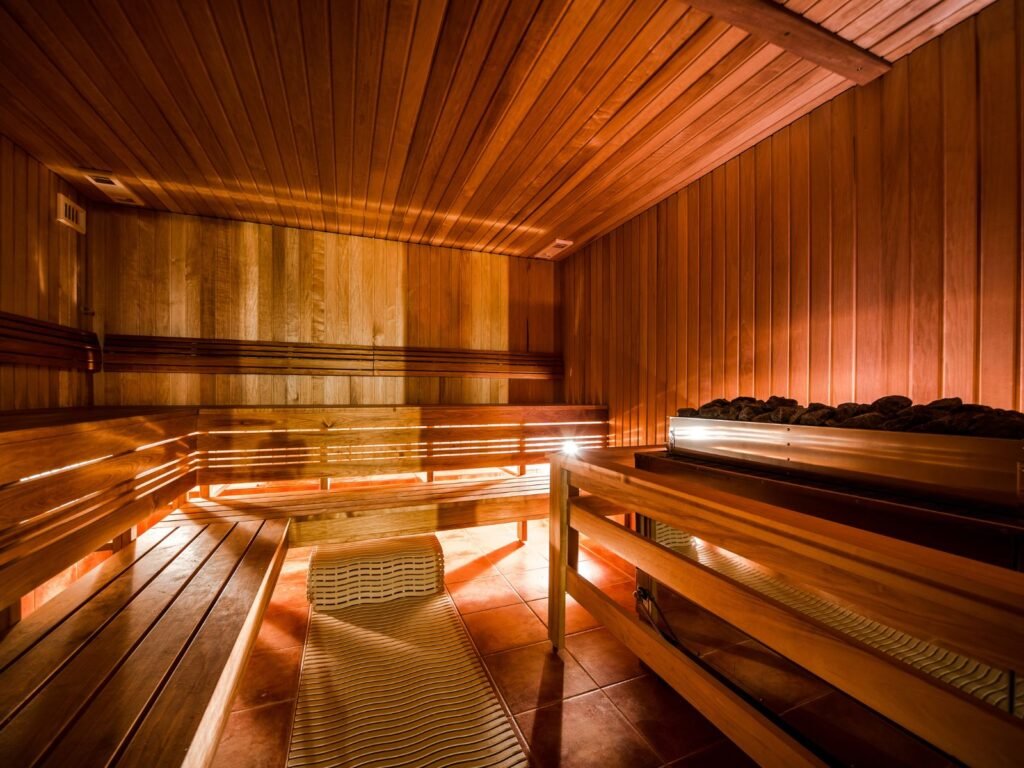
How It Works (in Plain Language)
Here’s what’s happening behind the sweat:
- Heat stress → cardiovascular load: Your body responds to high temperature much like to exercise. Core temperature rises, the heart rate increases, and blood vessels widen. The result: improved circulation and a well-trained cardiovascular system.
- Heat shock proteins & hormesis: A little stress makes you stronger. Sauna heat activates protective proteins that help repair cells and reduce inflammation — a process called hormesis.
- Vascular flexibility: The repeated heating and cooling keeps arteries elastic and blood pressure balanced over time.
- Brain & mood effects: Endorphins, serotonin, and a drop in cortisol combine to lift mood and lower anxiety — which is probably why most people emerge from a sauna looking calmer than they went in.
- Recovery & resilience: Heat improves blood flow to muscles and joints, easing soreness and speeding up recovery — which explains why athletes and regular humans alike use it as an “active rest” tool.
What Science Says — and What It Doesn’t
While the results are striking, these studies are primarily observational. They show strong correlations, not strict causation — meaning that sauna use is part of a lifestyle that supports health, rather than a single magic bullet.
It’s also worth noting that not all saunas are created equal: traditional high-heat saunas (around 70–100 °C) are the ones most studied. Lower-temperature infrared versions may feel gentler, but haven’t yet shown the same breadth of evidence.
Safety still matters: hydrate, cool down properly, and consult a medical professional if you have cardiovascular conditions, are pregnant, or take medications affecting blood pressure or heat tolerance.
The Bigger Picture
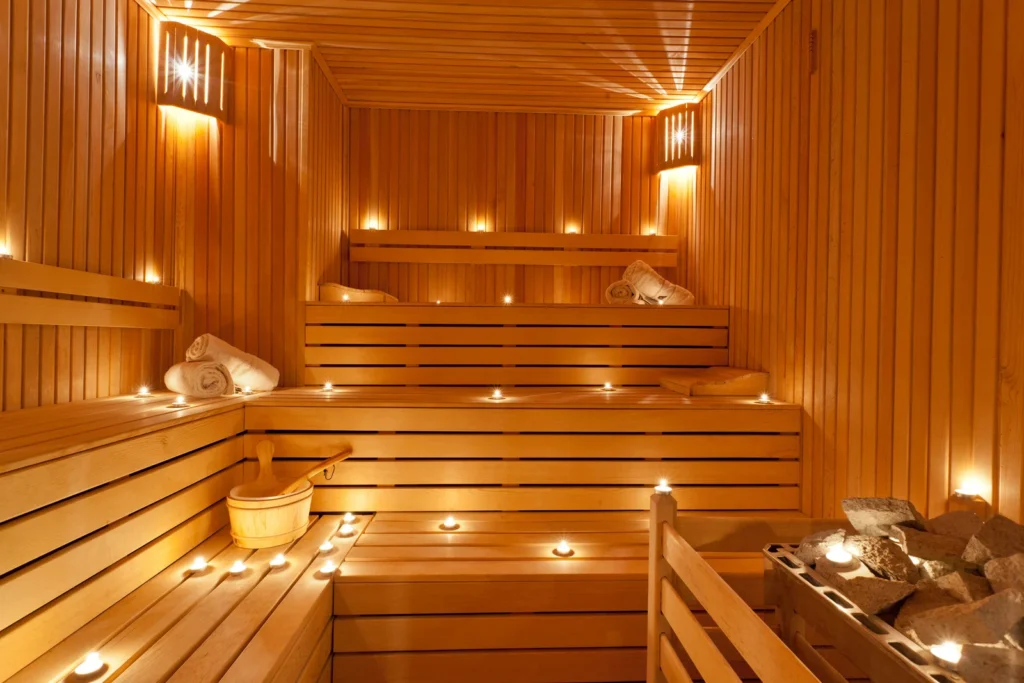
At its best, the sauna bridges ancient ritual and modern physiology. It’s where science meets simplicity — a controlled challenge that rewards you for showing up.
For those who make it a habit, the payoff isn’t just comfort; it’s better circulation, lower stress, sharper mind, steadier heart, and a body more resilient to life’s cold plunges, literal or otherwise.
In short: the sauna doesn’t just make you sweat — it makes you stronger.