
If the previous blogs taught us principles before methods and introduced the five pillars of health, this one asks the bigger question: what does a good life actually look like, and how do we structure our efforts to get there?
The Quest for the Right Questions

Marcus Aurelius, the Stoic emperor, reminds us that life is a journey of inquiry. He didn’t just seek answers — he sought the right questions. Stoicism teaches that asking “what is truly within my control?” or “what kind of person do I want to become?” leads to a life of clarity, purpose, and resilience.
But asking the right questions is hard. It forces you to confront what truly matters, beyond surface-level desires or societal expectations. You must wrestle with questions like:
- “What do I really care about?”
- “What kind of life do I want to build for myself and others?”
- “What legacy do I want to leave?”
These are not easy questions, and answering them requires honesty, reflection, and sometimes discomfort. The Stoic path is not about quick fixes — it’s about committing to the difficult process of uncovering your true priorities.
Applied to health, fitness, and lifestyle, this mindset flips the usual approach: instead of blindly asking, “What’s the best workout?” or “Which diet is most effective?”, the right question becomes:
- “Which practices align with my goals, context, and values?”
- “Which habits will compound into long-term fulfillment rather than short-term satisfaction?”
The journey of answering these meaningful questions often becomes more valuable than the answers themselves, guiding every decision from exercise routines to nutrition, work, and relationships.
SMART Goals: From Vagueness to Clarity
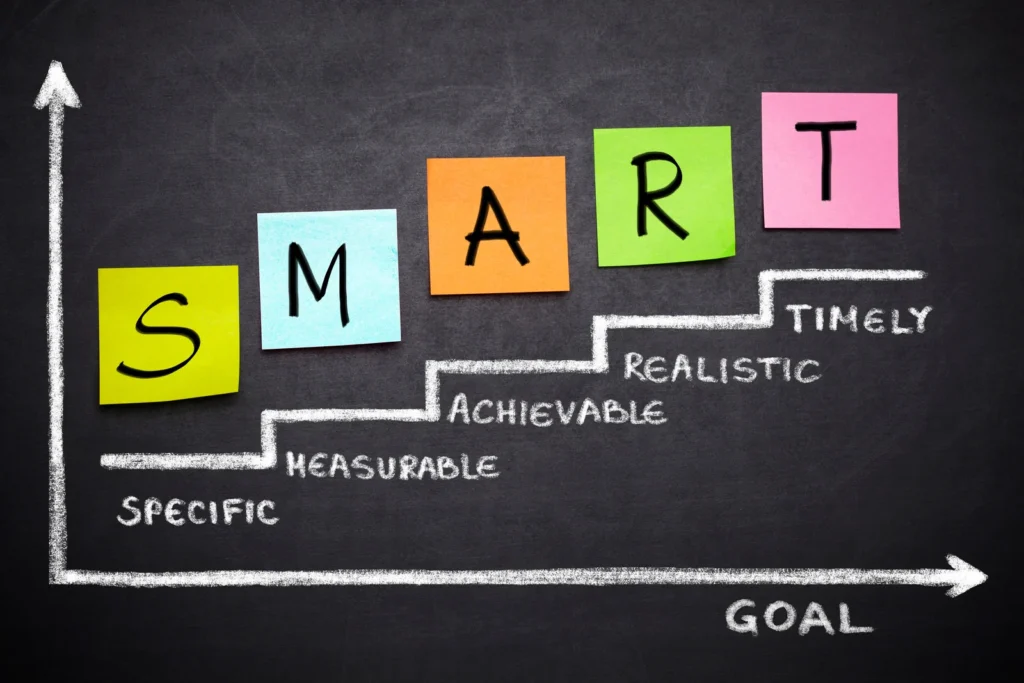
Even a life of inquiry needs structure. Enter SMART goals: Specific, Measurable, Achievable, Relevant, Time-bound.
- Bad example: “I want to lose fat and gain muscle.”
- Too vague: How much fat? Which muscles? By when? How will you measure success?
- Too vague: How much fat? Which muscles? By when? How will you measure success?
- Good example: “I want to be able to play catch with my son for 1 hour straight, 2 times a week, without irritating my shoulder, within 3 months.”
- Specific, measurable, relevant, and achievable — with a clear deadline.
- Specific, measurable, relevant, and achievable — with a clear deadline.
SMART goals are the bridge between your values, long-term vision, and daily action. They turn vague intentions into a structured, measurable journey.
Building Momentum: Lessons from Atomic Habits
James Clear’s Atomic Habits offers a simple but powerful idea: small changes, repeated consistently, lead to remarkable results over time. Two key strategies make habits stick:
- Decrease friction – make the behavior easier to start. Lay out workout clothes the night before, prep healthy meals in advance, or keep equipment handy. The easier it is to do, the more likely it becomes automatic.
- Increase reward – make the habit enjoyable. Pair exercise with music you love, celebrate small wins, or track progress visually. When a habit feels rewarding, it builds organic, intrinsic motivation — you do it because it feels good, not because someone told you to.
Applied to health, fitness, or any life pursuit, these principles create momentum without relying on willpower alone, compounding into mastery, confidence, and a sense of accomplishment.
The Marginal Decade: Investing in Your Future Self
Petter Attia’s concept of the “marginal decade” reminds us that lifestyle choices in midlife determine not only lifespan but healthspan — the period of life spent free from disease and disability. Every workout, mobility session, and health habit is an investment in your future self.
Think beyond the immediate gains. Training isn’t just about today’s performance; it’s about ensuring that your 50-, 60-, or even 80-year-old self can still move freely, recover quickly, and maintain independence. Strength, cardiovascular capacity, mobility, and balance compound over time — small, consistent investments today pay enormous dividends decades later.

Consistency, Mastery, and Enjoyment
Even though pursuing a variety of exercises and habits is ideal for longevity and fulfillment, mastery matters. The sense of progress, competence, and control fuels motivation and grit. Doing a few things consistently and improving over time is far more rewarding than jumping from trend to trend.
This principle applies beyond exercise: consistent reflection, reading, or creative practice compounds into wisdom, skill, and meaning over decades.

Bottom Line: Life as a Problem-Solving Journey
A good life isn’t defined by strict checklists or cookie-cutter routines. It’s about:
- Asking the right questions (Stoicism teaches us how).
- Building small, consistent habits (Atomic Habits).
- Training and investing in your future self.
- Committing to a journey of mastery, adaptability, and reflection.
Context turns every method, habit, and strategy from dogma into intelligent problem-solving. Each decision — whether it’s a workout, nutrition choice, or social engagement — should be evaluated not by popularity, but by its fit for your life, goals, and current state.