
Every sauna tradition carries a code nobody hands you at the door. It’s absorbed by watching, corrected quietly if you get it wrong, and rarely explained outright — because to everyone already inside, it was never a mystery to begin with. What follows is that code, in the order you’ll actually encounter it, from the moment you walk in to the moment you step into the cold.
Before You Enter: The Phone Stays Behind
This one is settled before the door even opens. A phone in a sauna violates the room on two levels at once — the practical (heat and electronics don’t mix) and the social (a screen is the single fastest way to remove yourself from a space built entirely around presence). Every tradition examined here agrees on this point without exception. The device gets left in the locker room, not carried in on silent mode as a compromise. There is no version of sauna etiquette where this one bends.
Shower Before You Enter
Near-universal, and for reasons that have nothing to do with the wellness-industry language of “detox.” A body carries oils, deodorant, sunscreen, and the accumulated residue of a normal day — all of it invisible, none of it something a shared hot room should be asked to absorb. Rinsing beforehand is about two things: giving your own skin a clean start to actually sweat, and respecting the fact that whatever transfers onto a communal bench doesn’t disappear when you leave. Nearly every sauna culture treats this as the entry price for a shared space, not a suggestion.
Skin Never Touches the Bench Directly
A towel or linen between skin and wood, always. What leaves the body doesn’t announce itself — no visible mark, no obvious residue — but wood keeps a record regardless, and that record becomes a stain, then a ruined bench, if nobody bothers to prevent it. A small habit, and one of the easiest to get right from the very first visit.
Choosing Where to Sit
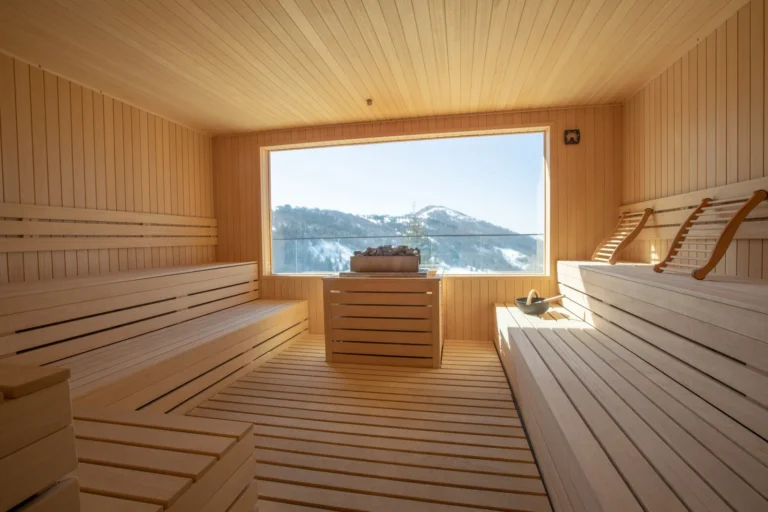
Heat stratifies — the upper benches run hotter than the lower ones, simple physics at work — and where someone sits tends to reflect how much heat they’re genuinely prepared to sit with, not their standing in the room. Nobody assigns seats. Nobody needs to. A first-timer who takes the lower bench isn’t doing anything wrong; they’re reading the room correctly. The upper bench isn’t reserved for anyone. It’s simply where the room’s hottest air happens to collect, and where comfort with it tends to grow over time.
Every Open Door Costs the Room Something
Heat doesn’t wait politely while a door stays open. Every entry and exit lets it escape, and a room that’s been carefully brought up to temperature loses ground with each unnecessary swing of the door. The etiquette here is simple and rarely stated outright: go in, close it behind you; come out, close it behind you. Someone lingering in the doorway, deciding whether to stay, is quietly cooling the room for everyone who already committed to being there.
No Staring, No Performing
The sauna is a shared, often quiet space among people in a vulnerable state — hot, sweating, sometimes lightheaded. The expected posture in return is simple: eyes to yourself, presence kept low-key, nothing about your own behavior designed to draw attention. This isn’t a room for performance, for lingering eye contact, or for any kind of social display. Whatever brought someone into the room, the room asks the same quiet composure back from everyone in it.
Silence, or Conversation — Read the Room First
Two traditions genuinely diverge here, and neither is the “correct” one. Finnish sauna leans toward stillness by default — quiet endurance, conversation optional rather than expected. Russian banya runs louder and more physical, conversation moving freely around the vigor of the ritual. Neither posture is universally correct on its own. What’s actually universal is the instinct underneath both: match the room. If it’s silent when you arrive, silence is the answer — and if you want to speak into that silence, ask first, the same way you’d ask before adding water to the stones. If conversation is already moving, joining at the same low register is welcome. The rule was never “always quiet” or “always social.” It was always “read the room before deciding.”
Water on the Stones Is Never Unilateral
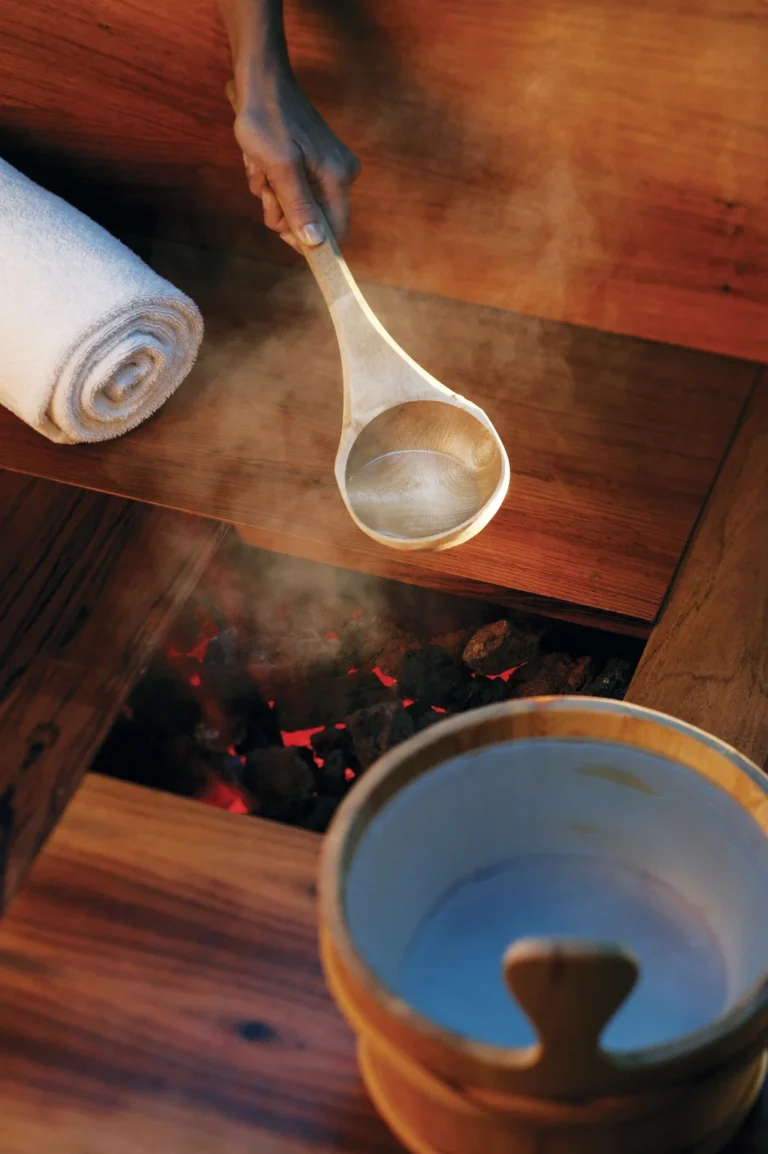
Löyly — the burst of steam released when water hits hot stone — is a shared ritual moment, and the etiquette around it is remarkably consistent across every tradition that practices it. Ask before adding water, every time, in a shared space. The person seated closest to the bucket typically carries the informal responsibility for this, not because of any hierarchy, but because proximity made it their job by default. Too much water, poured without checking, can turn a comfortable room uncomfortable for everyone in it within seconds. A small amount, added deliberately, respects both the ritual and the people sharing it.
Shower Again, Before the Plunge
A detail often missed by newcomers moving through their first contrast session: the shower before entering a shared cold plunge is a separate act from the one before the sauna, not a redundant repeat of it. Sweat carried straight from the heat into a communal cold pool is exactly the kind of transfer the earlier pre-sauna shower was designed to prevent in the first place — just applied to the next shared surface in the sequence. Rinse again. The ritual doesn’t end with the heat; neither does its etiquette.

Tradition Passed from Generation to Generation…
None of this needs to be memorized before a first visit. Walk in as a novice, and most of it will simply reveal itself — watch which bench the regulars choose and why, notice who asks before reaching for the water, feel how the room’s volume rises and falls without anyone announcing the shift. Observation is the best teacher here, the way it’s always been. A quiet question, asked at the right moment, is the second best — and the two together, watching closely and asking when something still isn’t clear, is how the tradition has always been passed on: by paying attention to the people who already know it, and quietly joining the rhythm they’ve built together.