
In the 16th century, a physician named Paracelsus wrote a line that toxicology still quotes five hundred years later: the dose makes the poison. He meant it plainly — that whether something helps or harms you isn’t a fixed property of the substance itself, but a question of how much of it you’re exposed to. It took modern science another four centuries to turn that observation into a formal, testable principle. That principle is hormesis, and it’s the single idea connecting nearly everything we’ve covered in this blog series so far.
The Formal Definition
Hormesis describes a biphasic dose-response: a low dose of a stressor produces a beneficial, stimulating effect, while a high dose of that same stressor produces harm. Not a straight line from “more is better” to “more is worse” — a curve, rising then falling, with a genuine sweet spot in the middle. Researchers sometimes call that sweet spot the Goldilocks zone: enough stress to trigger adaptation, not so much that it causes damage the body can’t recover from.
The mechanism behind it is adaptive overcompensation. A mild stressor disrupts the body’s equilibrium just enough to trigger a repair-and-strengthen response — and that response typically overshoots the original baseline, leaving the system slightly more resilient than before the stress ever occurred. Do this repeatedly, in controlled doses, and the cumulative effect is a body meaningfully better equipped to handle that specific kind of stress the next time it shows up.
A Genuinely Broad Phenomenon
This isn’t a fringe idea propped up by a handful of studies. A database compiled by hormesis researchers Calabrese and Baldwin catalogs more than 5,600 documented dose-response relationships across roughly 900 different chemical and physical agents. Exercise, heat, cold, caloric restriction, low-dose radiation, and a range of plant compounds have all been documented producing this same biphasic pattern. It shows up in yeast, in rodents, in human muscle tissue, and in whole human populations tracked for decades — which is precisely the kind of research this blog has been citing since our first post.

The Thread Running Through This Whole Series
Look back across everything we’ve covered, and hormesis is the mechanism underneath nearly all of it, just wearing different clothes each time.
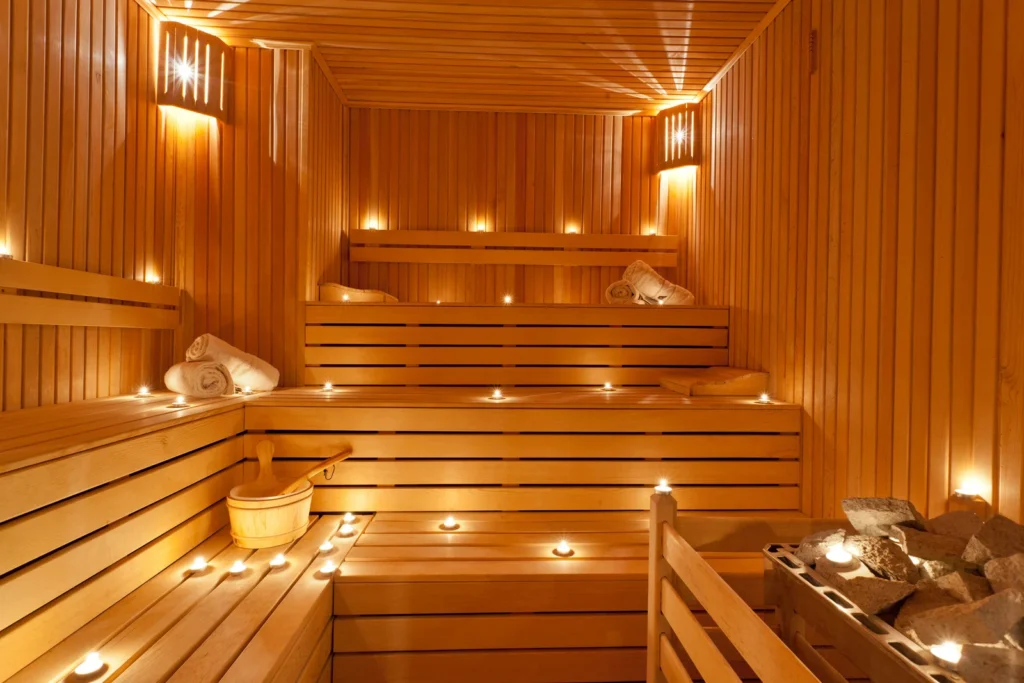
Heat shock proteins — the repair mechanism behind sauna’s cardiovascular and cognitive benefits — are a textbook hormetic response: a mild thermal stressor triggering a cellular repair cascade that leaves cells more resilient afterward. The vascular pump behind contrast therapy is the same logic applied to blood vessels: controlled vasodilation and vasoconstriction, repeated, producing a circulatory system that handles both states more efficiently over time. Altitude adaptation runs on it too — thinner air is a real physiological stressor, and the body’s EPO-driven response to it is a textbook overcompensation, building more oxygen-carrying capacity than the altitude technically demands. Progressive overload in strength training is hormesis applied to muscle and bone: a controlled mechanical stressor, followed by a rebuilding response that leaves tissue stronger than before the stress was applied.
Four completely different systems — thermal, vascular, respiratory, muscular — and the same underlying principle driving all of them. That’s not a coincidence worth glossing over. It’s the actual reason a wellness philosophy built around heat, cold, and structured physical stress holds together as one coherent idea instead of four unrelated services bundled under one roof.

Where the Idea Needs a Caveat
Hormesis as a general biological principle is well-established. Specific claims made in its name are not uniformly well-supported, and that distinction matters. The width of the “Goldilocks zone” differs by stressor, by tissue, and by individual — which is precisely why this series has spent real space debunking the assumption that more heat, more cold, or more intensity is automatically better. It rarely is. The entire value of the hormetic model lives in the word “controlled.” Remove that word, and you’re no longer describing hormesis. You’re describing overexposure with better branding.
Why This Is the Backbone Post
Most of what Tatra does — the sauna, the structured training, the purposeful athletic recovery — isn’t three separate wellness trends assembled under one address. It’s one operating principle, applied through three different mediums. The body doesn’t get stronger by being protected from every form of stress. It gets stronger by being asked, in careful and repeatable doses, to handle a little more than it currently can.
Sources: Calabrese EJ, Baldwin LA. “Defining hormesis.” Human & Experimental Toxicology, 2002. Mattson MP. “Hormesis defined.” Ageing Research Reviews, 2008;7(1):1-7.