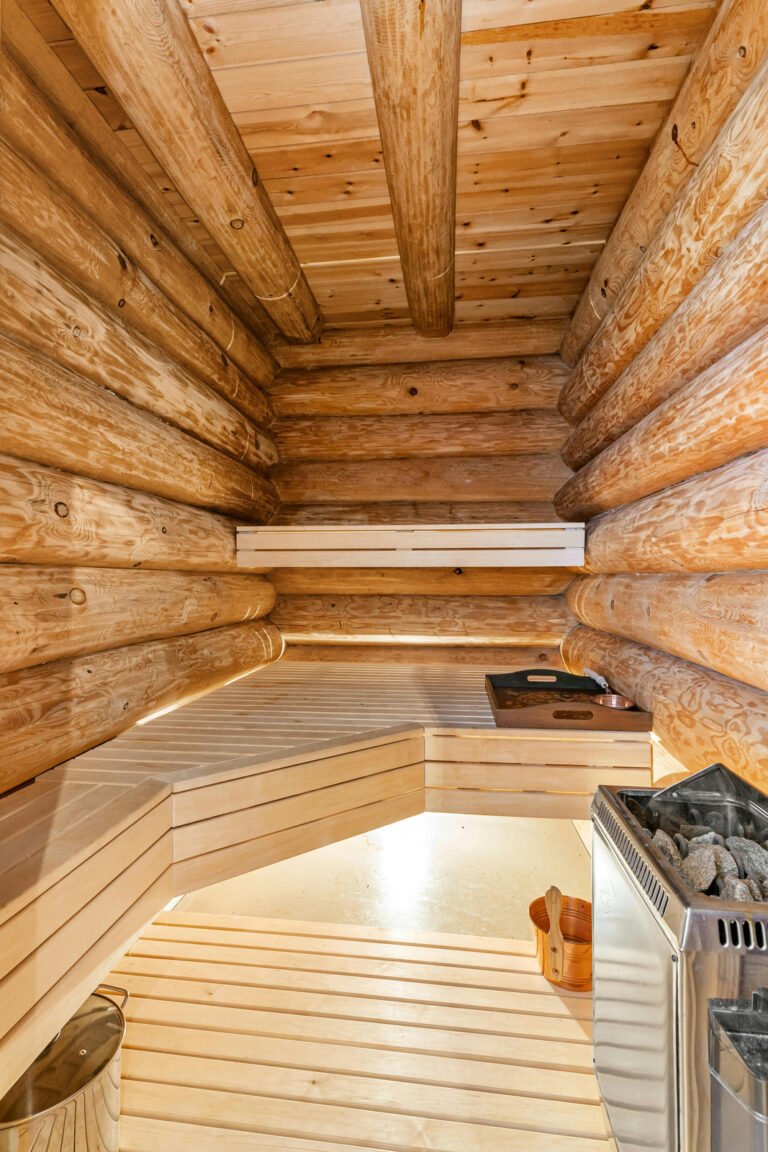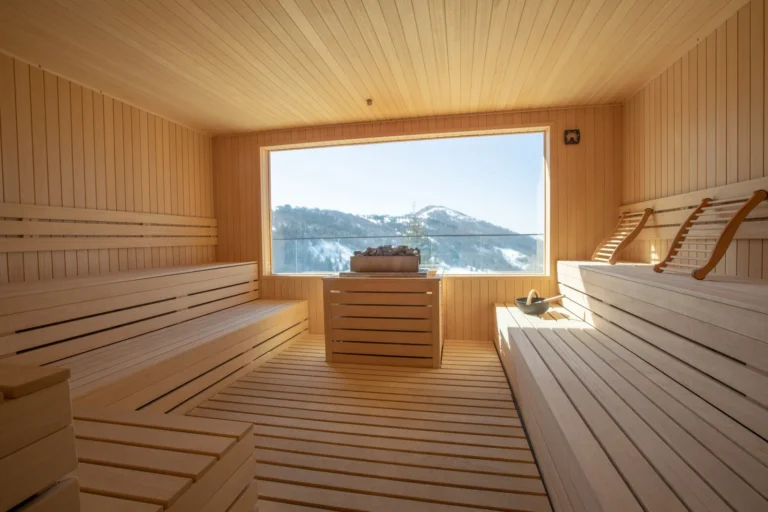
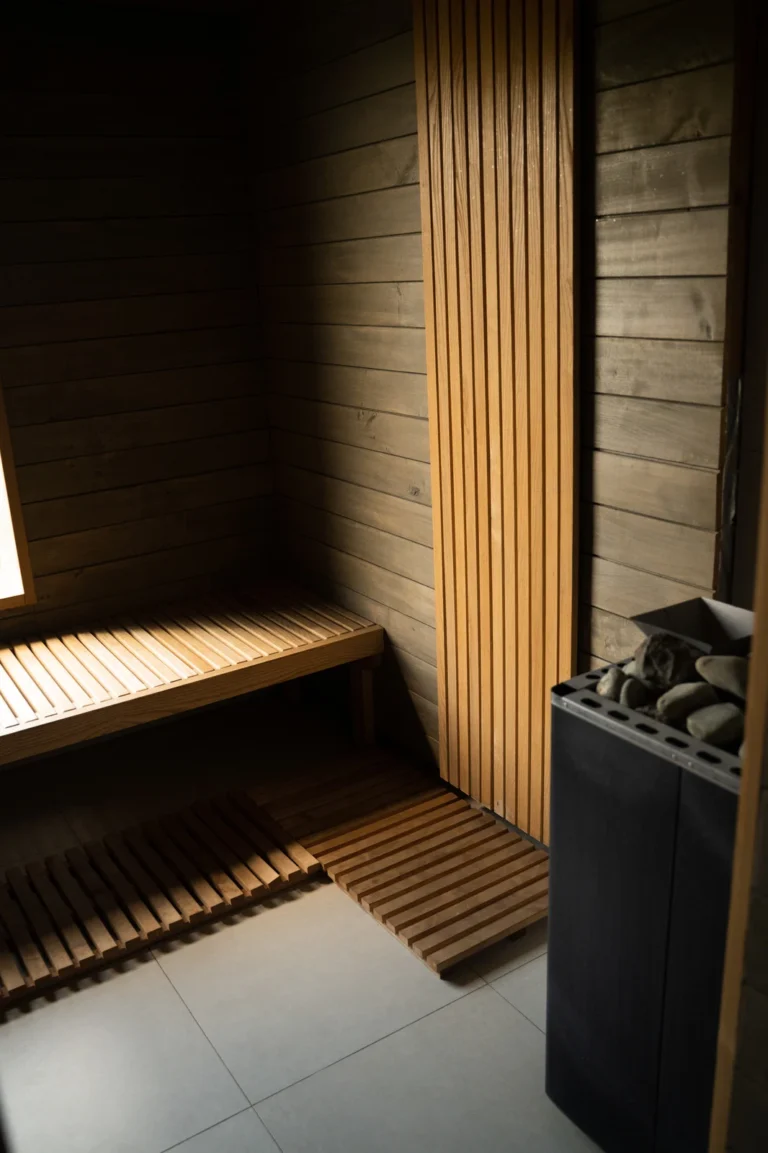
Ask most people to picture a sauna and they see a small cabin, a wooden bench, a closed door, and one person behind it. The history says otherwise. UNESCO, which added Finnish sauna culture to its list of intangible cultural heritage in 2020, describes a practice passed down in families and carried out in homes or public places…in a country with 3.3 million saunas for 5.5 million people. The Russian banya is older still: a communal steam bath with more than a thousand years behind it, used by peasants and nobles alike. The two traditions differ in ritual and agree on a premise. The heat is meant to be shared.
The Shared Room
In Finland, sauna was never a solitary appliance. UNESCO’s own wording is that its traditions “are commonly passed down in families,” learned beside the people who already know the room. Public saunas were a fixture of Finnish cities until they nearly disappeared after the 1950s, and new ones are being built again today.
The banya tells a similar story. Russians traditionally went once a week, typically on Saturdays, and the habit faded in large cities as more people moved into private apartments. In both countries the practice thinned as bathing moved behind private doors. The communal sauna is less a novelty than a return.
Connection Is a Health Variable
One of the most cited findings in social epidemiology comes from a 2010 meta-analysis in PLOS Medicine. Pooling 148 studies and 308,849 participants, it found that people with stronger social relationships had a 50% greater likelihood of survival than those with weaker ones (odds ratio 1.50, 95% CI 1.42 to 1.59). The authors judged the influence of social relationships on mortality to be comparable with well-established risk factors.
This is observational evidence, and it measures relationships in general, not saunas. What it establishes is that company is a variable worth designing for. A communal sauna offers recurring, low-pressure time with other people: no agenda, no screens, nothing to perform.
What a Shared Room Changes
UNESCO’s description of Finnish sauna culture borrows the language of church: a “church of nature,” where people cleanse body and mind and find a sense of inner peace. Finns have a word, sisu, for steady resolve under strain, and the sauna is where it is often rehearsed, in the heat and beside someone else enduring the same.
The banya has long been described as an important bonding place in Russian culture, and it mixed social classes in a way few other rooms did. Historian Ethan Pollock calls it a communal institution that creates community. Quiet and company are not opposites in these rooms. The silence is shared too.
Company Is Also Safety
Death in a sauna is rare. A study of Finnish cases from 1990 to 2002 put the annual rate at under 2 per 100,000 inhabitants. It also found that 50% of cases were under the influence of alcohol, and its authors advised that a drunken bather should not be left alone in the sauna. An earlier review from 1988 estimated that alcohol contributed to some 20 to 25 sauna-related deaths a year in Finland, while noting that direct research on the interaction was lacking.
The pattern is consistent with the tradition’s own habits: the drink comes after the heat, and the bather rarely goes alone. A shared sauna is the oldest safety system the practice has. Someone is there to notice, to help, to call for help.
Etiquette Keeps It Working
A shared room survives on shared habits: a quiet voice, a door closed behind you, a towel under you, a question before water goes on the stones. These unwritten rules are the maintenance of the room. We cover them in full in our last Blog post on sauna etiquette.
The Honest Caveat
No study compares a communal sauna with a solo one for health outcomes. The Kuopio studies measured how often men used the sauna, not who was in the room with them. The research on social connection measures relationships, not heat. We are not claiming that company multiplies the benefits of the sauna. We are claiming something more modest: that heat and company are each worth having, and that the tradition has always put them in one room.
The Room We’re Building
In Colorado Springs, we are building a sauna house and a recovery lounge with this in mind: a room large enough for company, and a place to linger once the heat is done. The heat is the part that can be measured. But the people are the reason the tradition lasted a thousand years!
Sources: UNESCO, “Sauna culture in Finland,” Representative List of the Intangible Cultural Heritage of Humanity, inscribed 2020 (ich.unesco.org). Holt-Lunstad J, Smith TB, Layton JB. “Social Relationships and Mortality Risk: A Meta-analytic Review.” PLOS Medicine, 2010;7(7):e1000316. Kenttämies A, Karkola K. “Death in sauna.” Forensic Science International, 2008. Ylikahri R, et al. “The sauna and alcohol.” Annals of Clinical Research, 1988. Pollock E. Without the Banya We Would Perish: A History of the Russian Bathhouse. Oxford University Press, 2019. Kustanovich (2007), cited via Wikipedia, “Banya (sauna),” for the weekly Saturday custom.